My F-1 Visa Rejection and How I Got Approved Later
If you're preparing to study in the U.S., the visa interview is probably one of the most nerve-wracking steps.
I’m currently studying in LA, but about three years ago, I actually got my F-1 visa rejected once. I wanted to share that experience and how things worked out afterward.
Most of the required documents are pretty standard.
I-20, DS-160, SEVIS fee, interview confirmation — I had everything prepared without any issues.
At the time, I thought I was fully ready. But what really mattered wasn’t the documents. It was the interview.

Since the F-1 visa is a non-immigrant visa, you need to clearly show that you plan to return to your home country after your studies. Unfortunately, I gave the opposite impression.
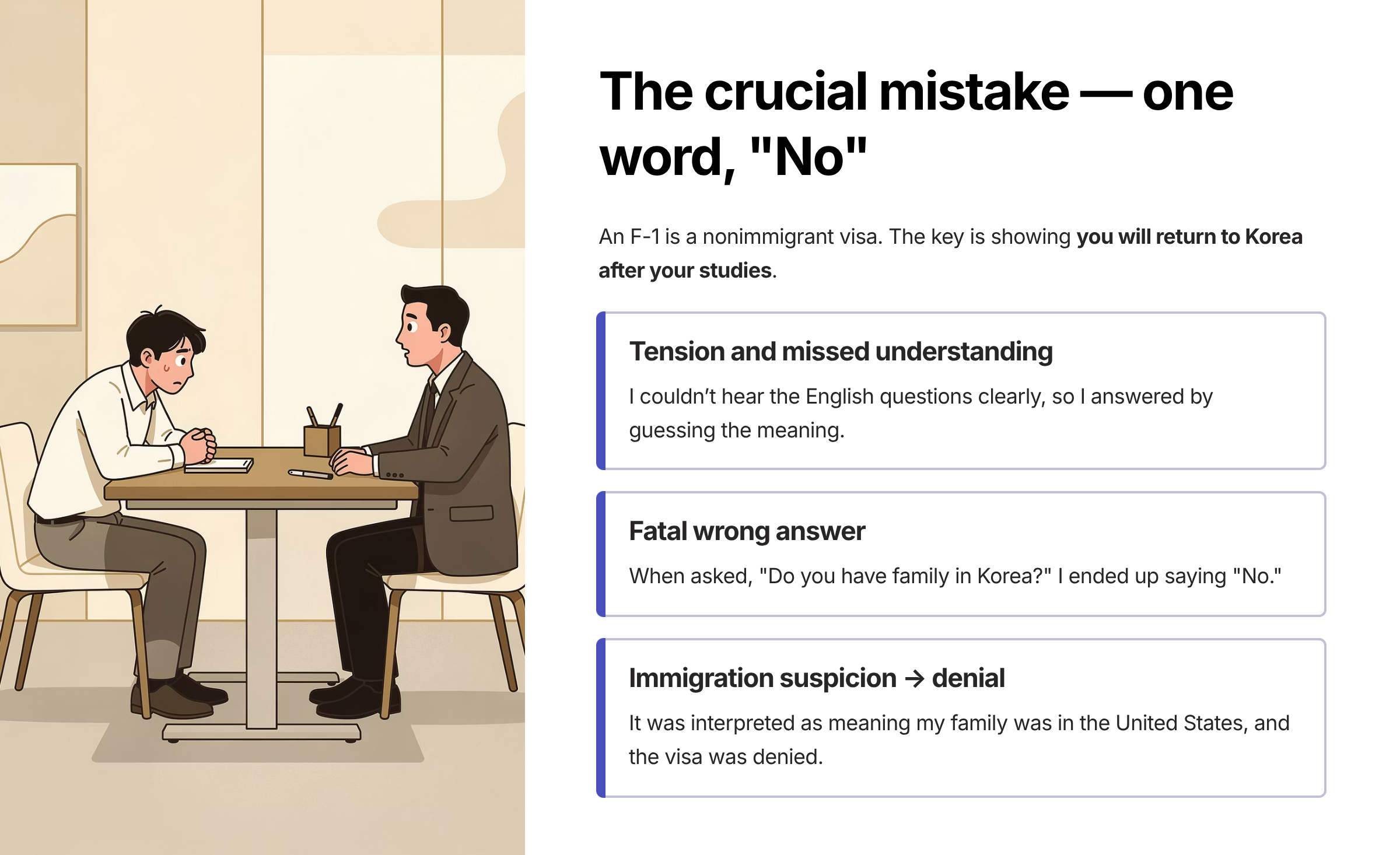
I was extremely nervous during the interview, and I had trouble understanding the questions clearly. Instead of fully understanding each sentence, I was kind of guessing based on keywords.
At one point, I was asked where my family lives. The problem was, I couldn’t clearly hear whether the officer was asking about Korea or the U.S.
So I just said “No.”
Looking back, that was a big mistake. The question was actually asking if my family was in Korea. My answer ended up sounding like my family was in the U.S.
That immediately raised suspicion about immigration intent, and my visa was denied on the spot.
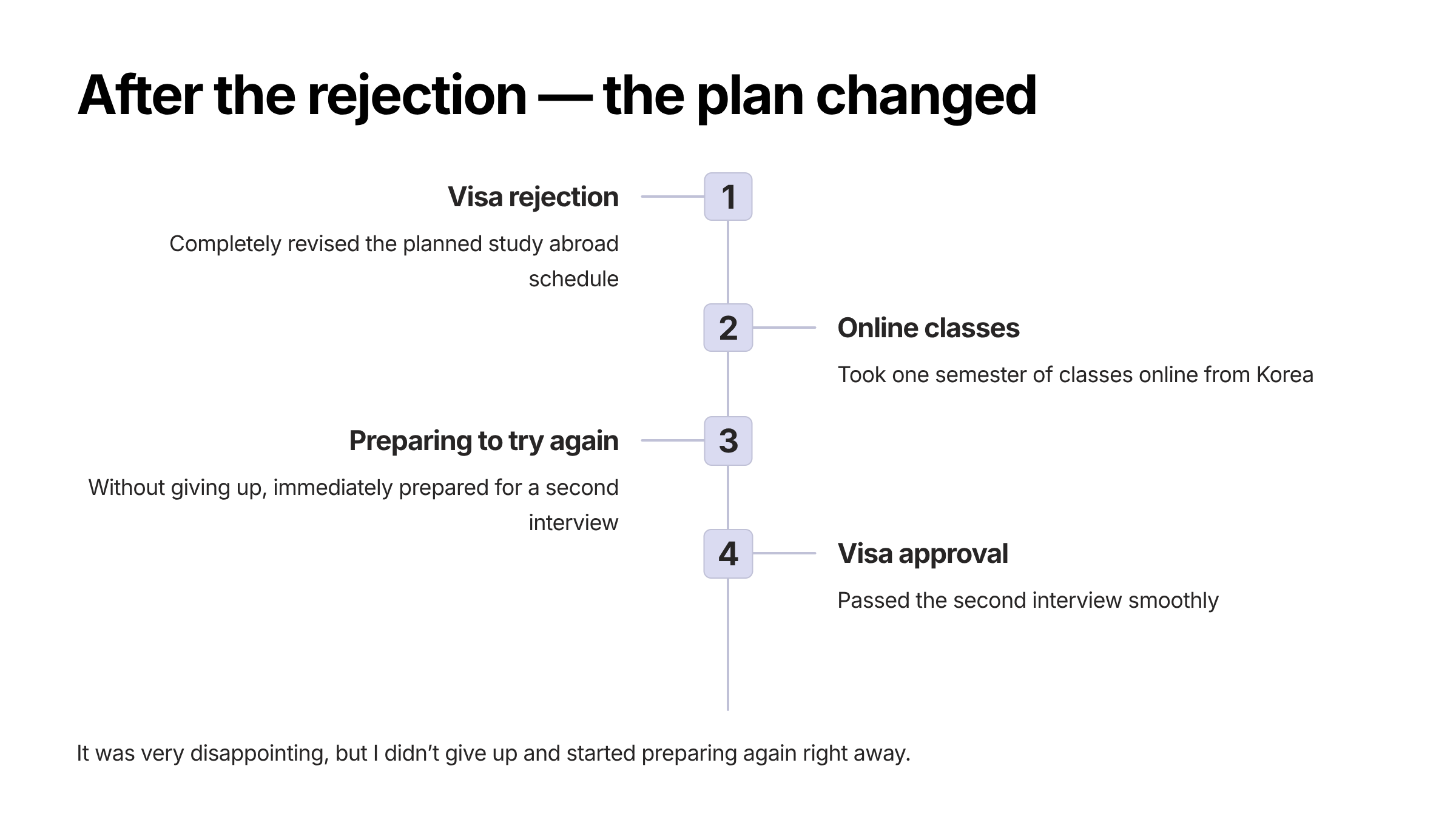
After the rejection, my plans completely changed.
I ended up taking that semester online from Korea instead of starting my life in the U.S. as planned. It was frustrating, and I definitely felt disappointed in myself.
Still, I didn’t want to give up, so I scheduled another interview.
This time, I focused on keeping things simple:
Listen carefully, ask again if I don’t understand, and answer clearly and briefly.
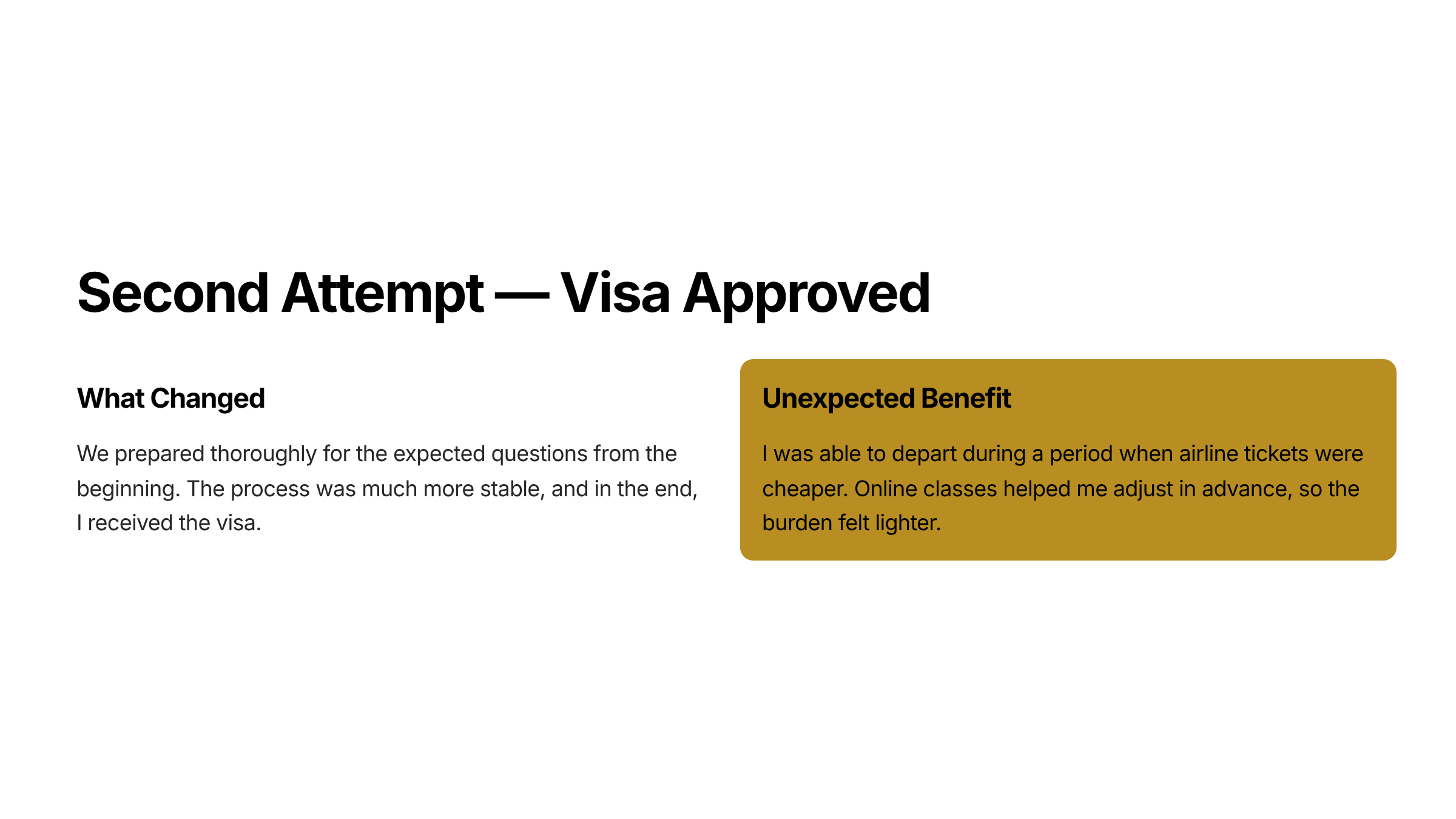
The second interview went much more smoothly, and I was able to get my visa approved.
Even though I missed the August start and had to continue studying from Korea for that semester, it wasn’t all bad.
Flights were cheaper in the winter, I had time to adjust to classes beforehand, and I felt less overwhelmed when I finally arrived in the U.S.
Looking back, it actually helped me start more comfortably.
If there’s one thing I learned, it’s this:
A visa rejection is not the end.
Even small misunderstandings can affect the outcome, but if you prepare again and stay calm, things can turn around.
If you’re going through something similar, don’t lose confidence.
There’s always another chance.
댓글